

Seasonal trips
The Night of the
Radishes in Oaxaca
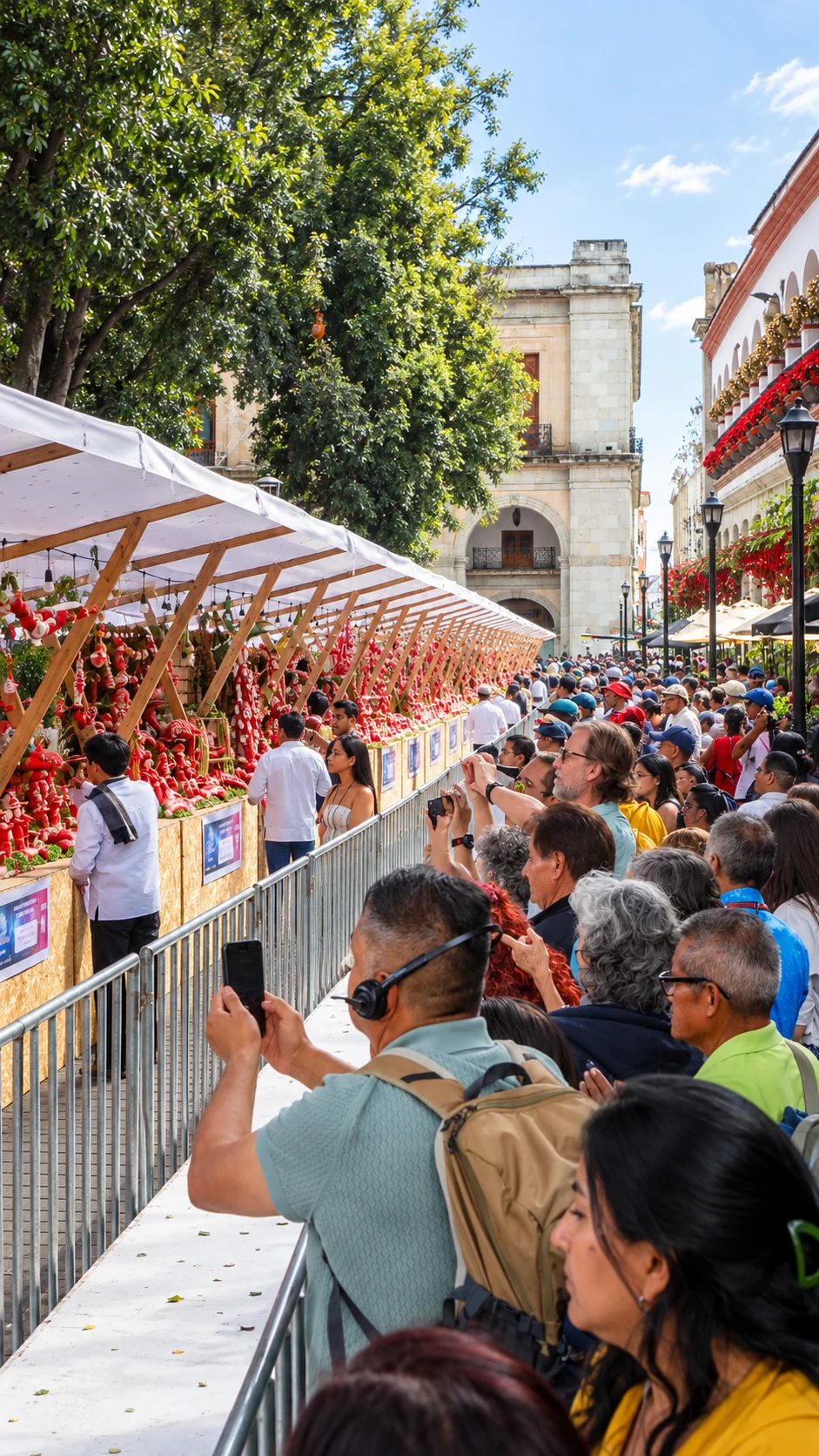
I kept photographing the little faces. He wanted to know how the larger figures stayed upright. Between us, we took a long time to get around Oaxaca’s Zócalo.
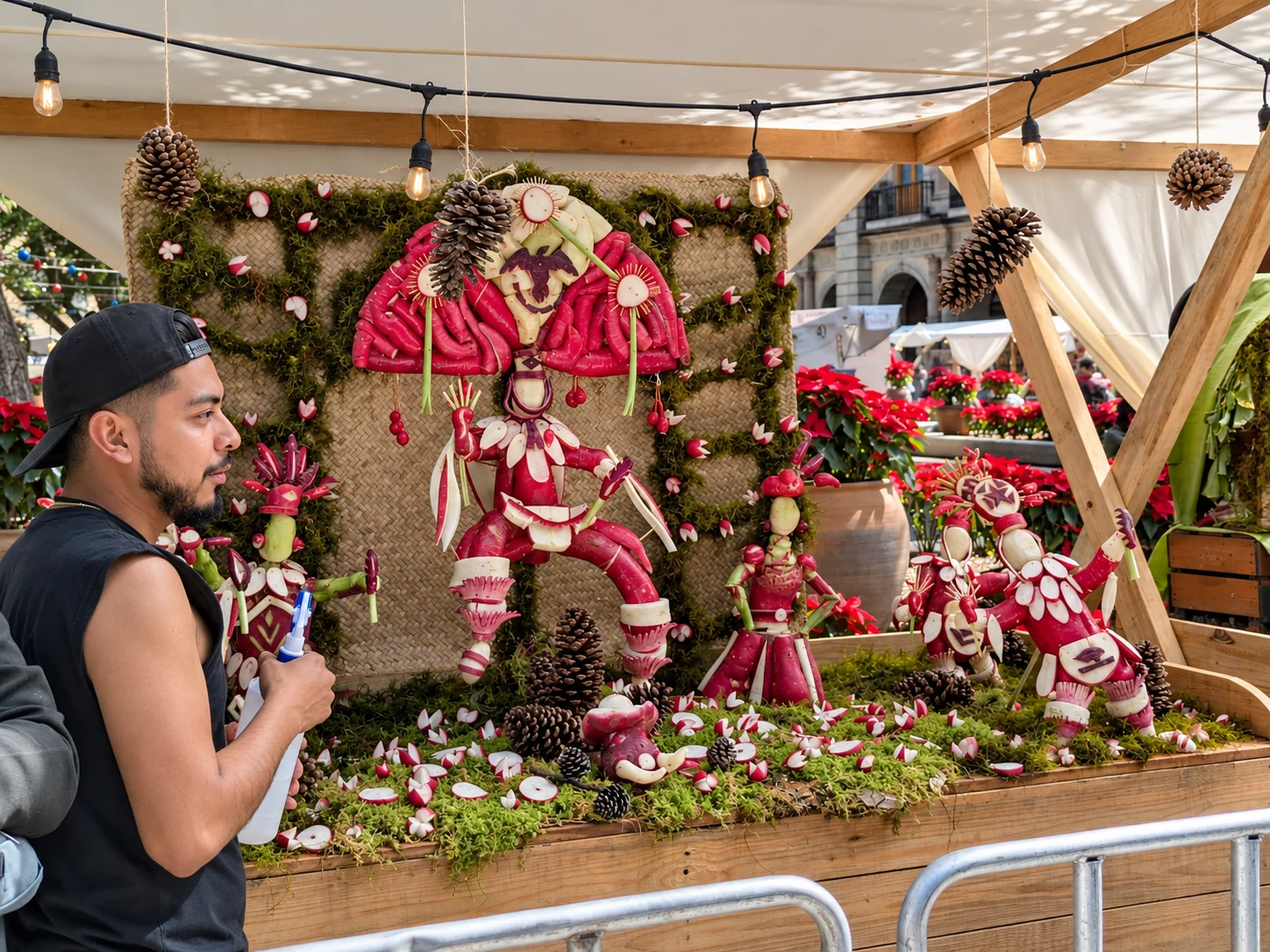
We kept losing each other at the stands. I would move on from a display, turn round and find him still looking at something near the bottom. Then he would catch up just as I noticed a tiny face I had missed. Walking around the exhibition at any sensible pace was hopeless.
I had expected to be the one holding us up. Usually I am. This time, whenever I put my phone away, he found another construction he wanted to inspect.
Noche de Rábanos, the Night of the Radishes, takes place on 23 December. The exhibition we visited had 126 entries made from radishes, corn husks and dried flowers. Some entries filled their stands with whole scenes, so the number of figures was another matter.
22 December
We heard the music first
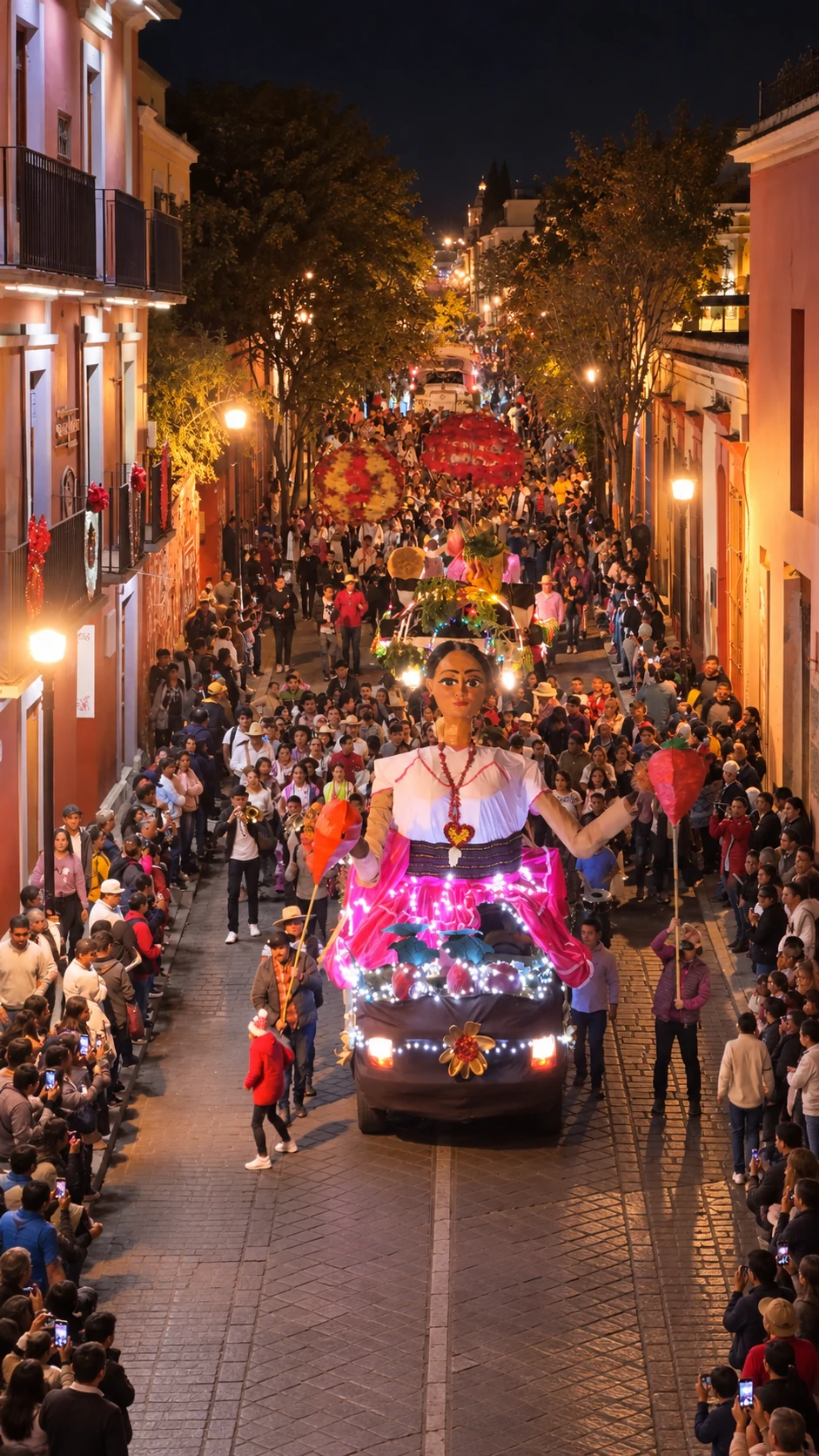
The evening before the exhibition, we watched the festive procession. I was trying to fit a whole giant figure into a photograph while my partner kept pointing behind me: something else was coming. Several pictures ended up with a stranger’s shoulder in front and only half a head above it. Our laughter came through quite clearly on the videos, though.
The procession is called a convite. The one we watched took place on 22 December, with eight bands, large puppets known as mojigangas and decorated carts. Its route ran from the Fuente de las Ocho Regiones to the church of La Merced. We had originally given most of our attention to the following day’s exhibition. Now we were pleased we had arrived in time for this too.
We stayed longer than we had meant to. Neither of us suggested leaving first.
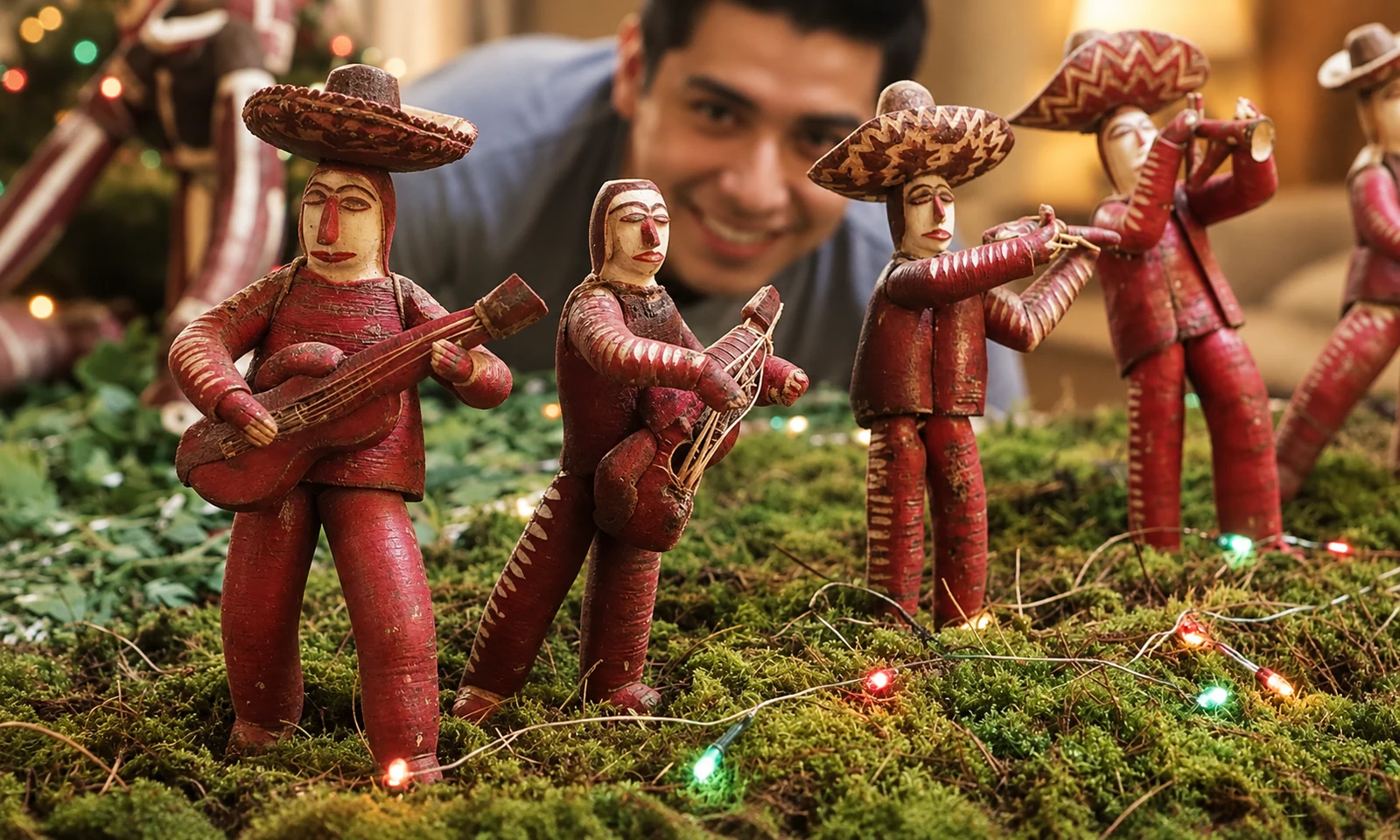
23 December · The Zócalo
Every display slowed us down
We came to the square in the afternoon. Despite the name, the exhibition opened to visitors at 3:00 PM (15:00). I wanted to see the carving in daylight; he wanted to see the square after dark. We had left the rest of the evening free, so there was no need to settle the argument.
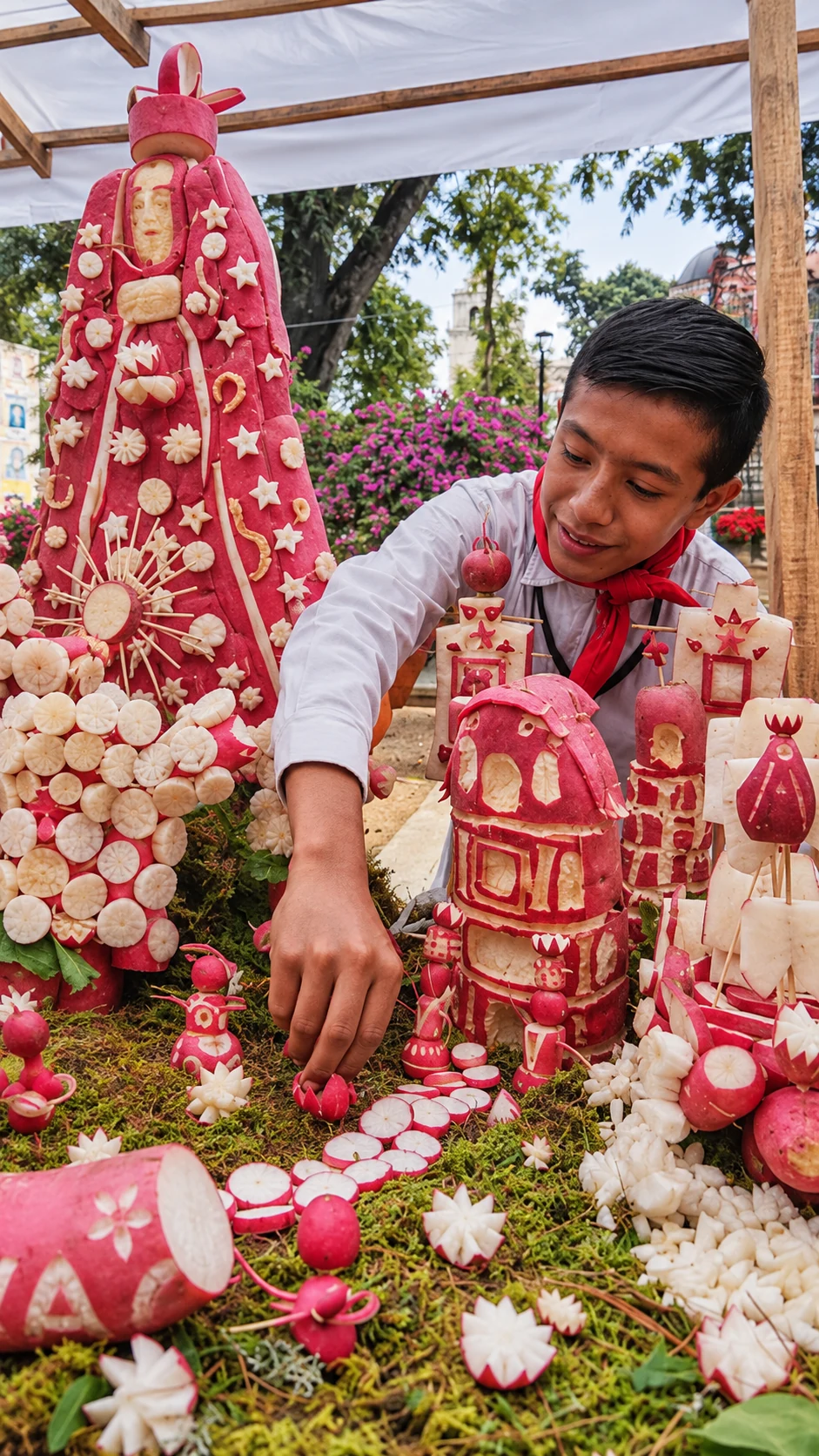
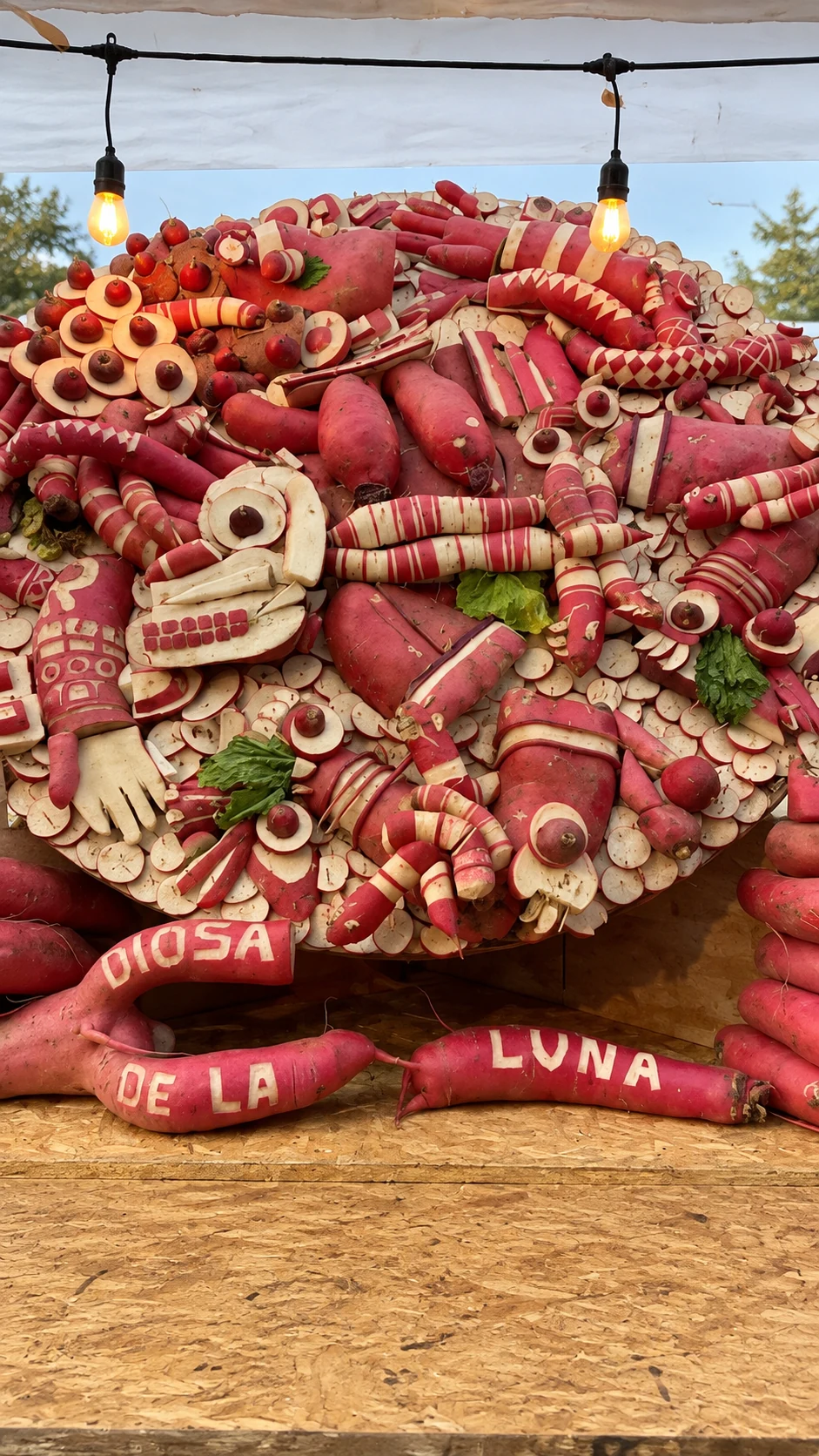
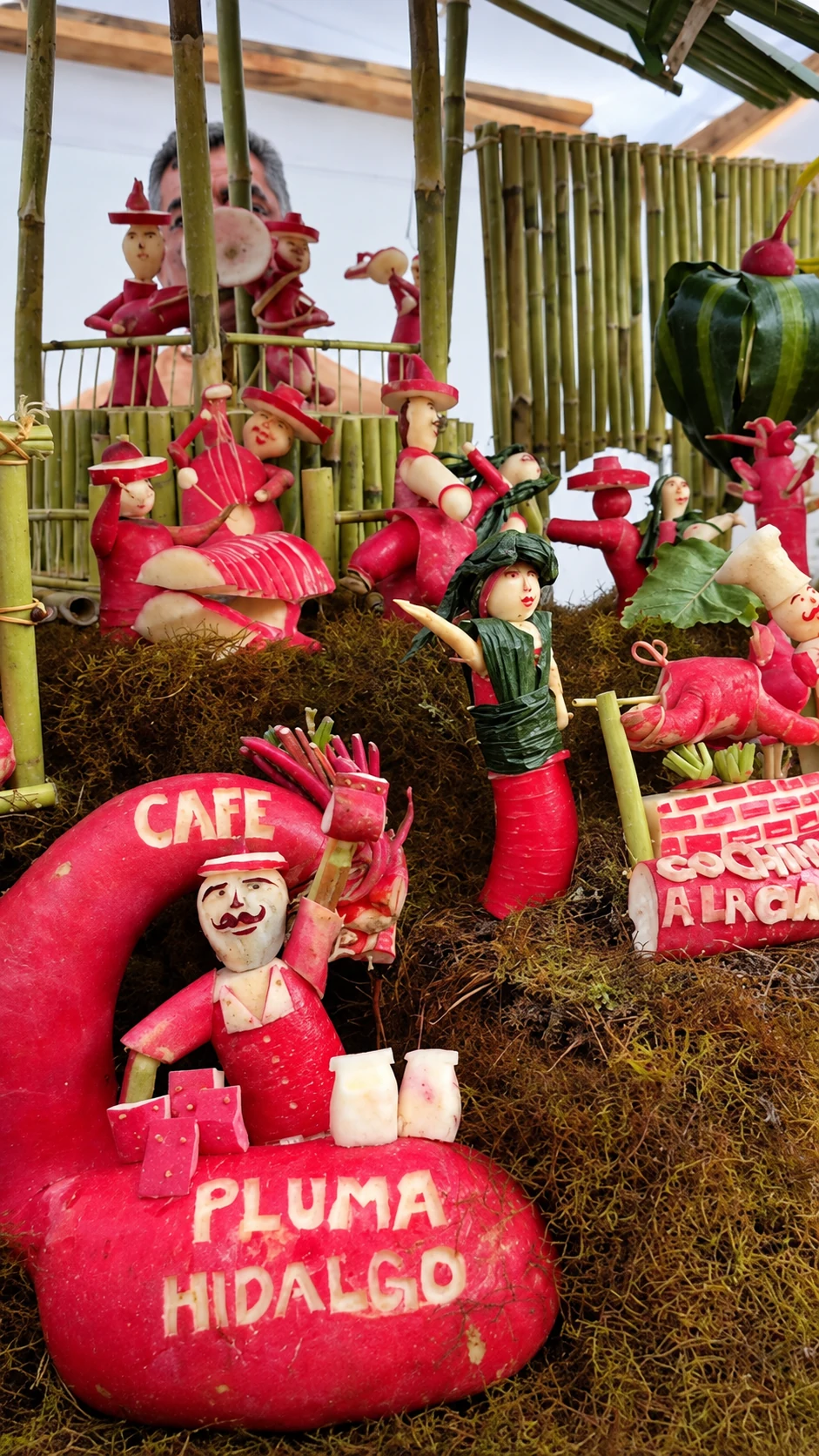
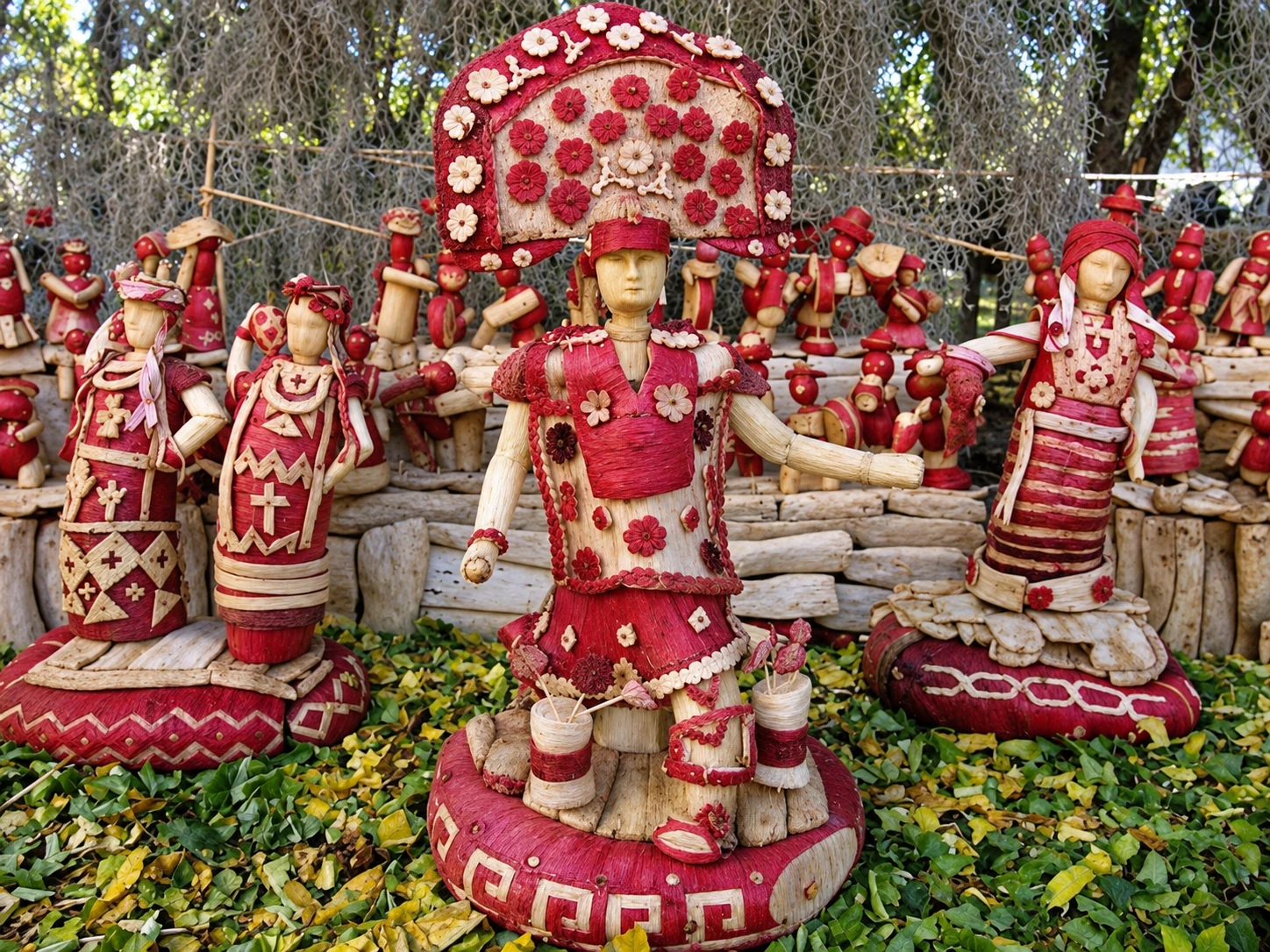
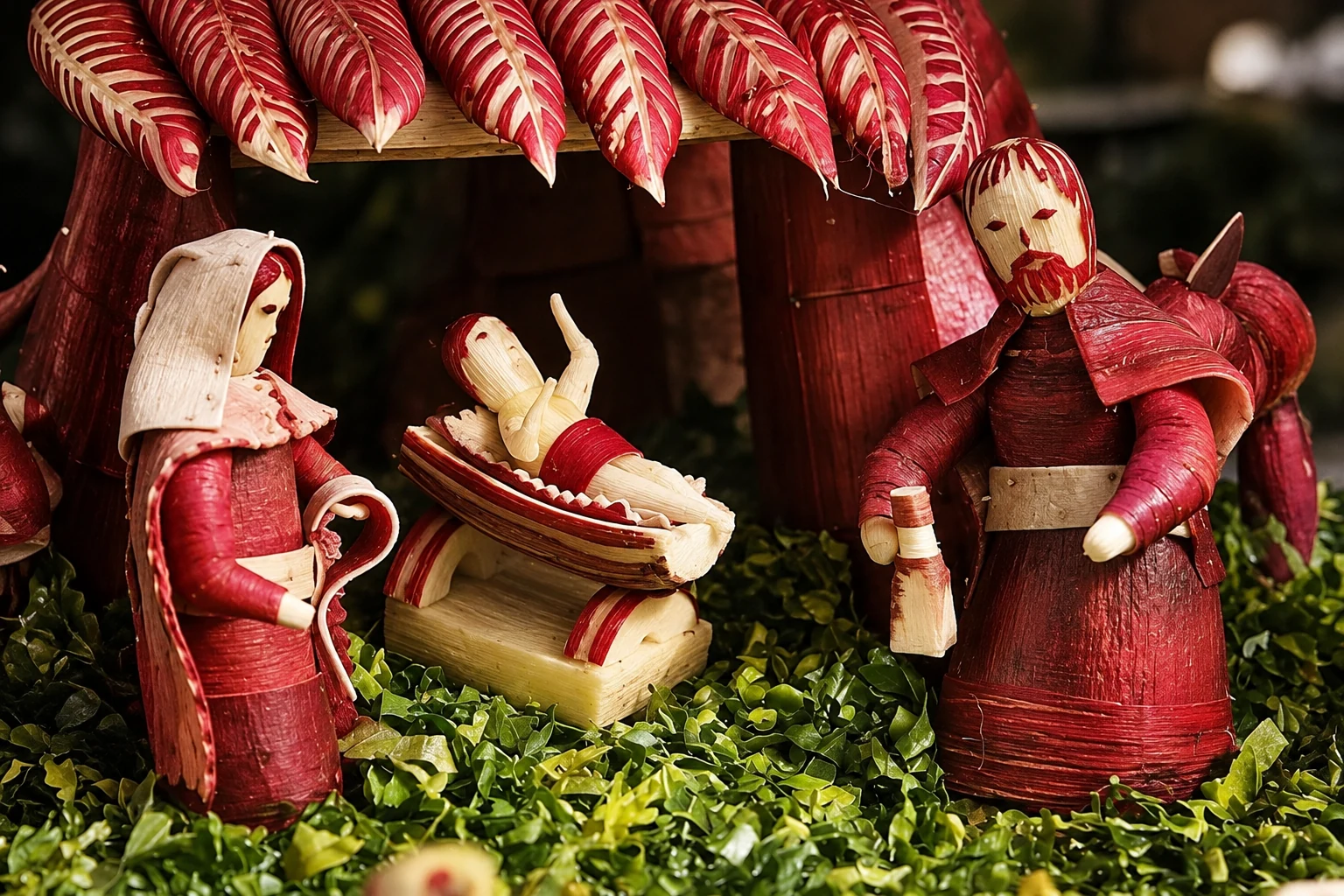
From a little way back, the figures looked like groups of red and white shapes. Close up, you could follow the cuts. A patch of red skin became part of a costume. The exposed white flesh made a cheek or a sleeve. I started by photographing entire scenes, then kept moving the camera in until hardly any of the scene was left.
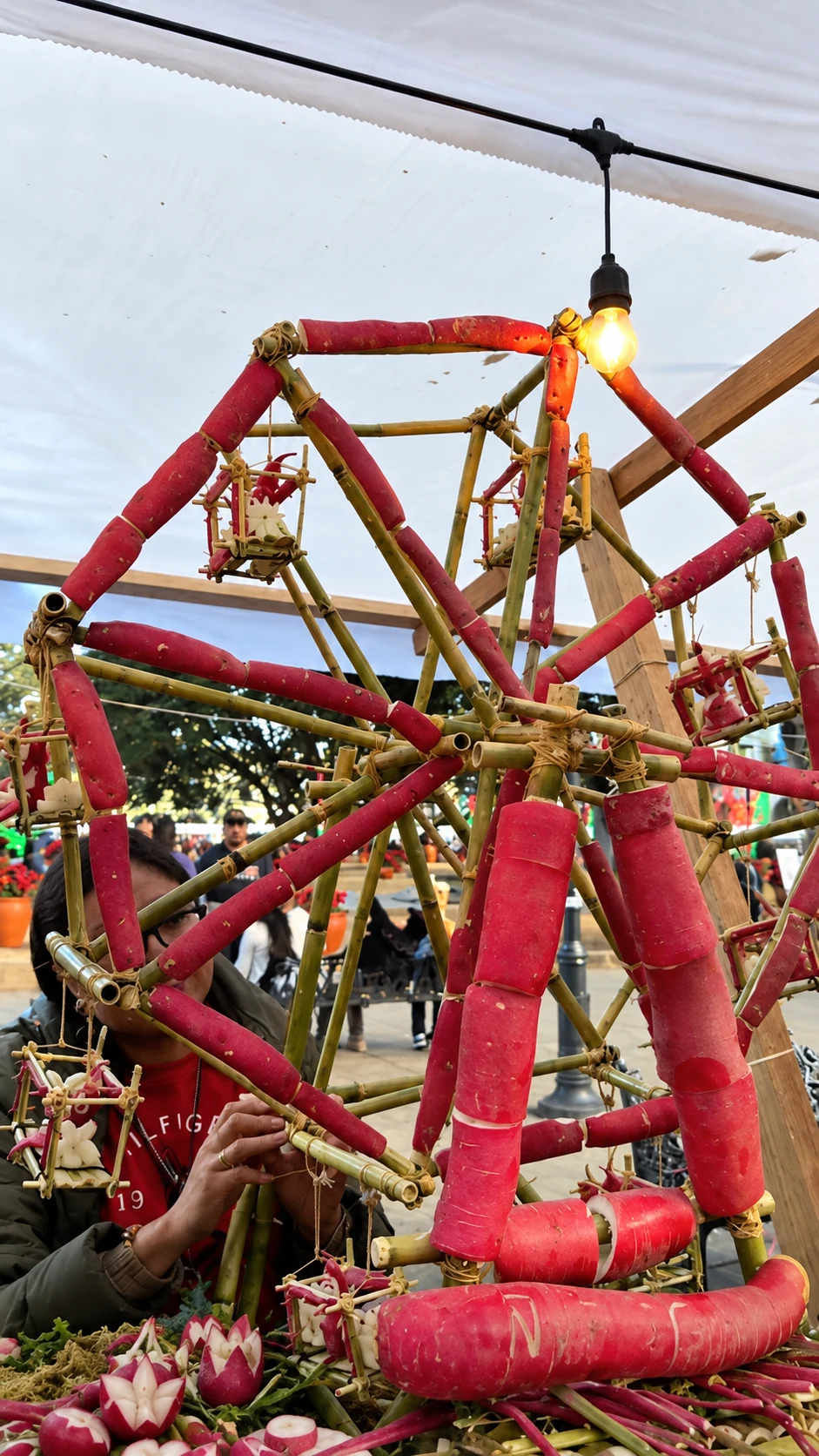
Our tastes separated quite quickly. I liked the people: where they were looking, what they were holding, whether they seemed to be dancing or simply waiting for something. He wanted to work out the larger constructions. By the time I had finished with somebody’s hat, he was studying how the next piece had been put together.
The subjects were just as varied. Alongside local celebrations and dances, there was room for creatures from somebody’s imagination. The prize list included an axolotl and a dance of dragons. He was particularly pleased about the dragons.
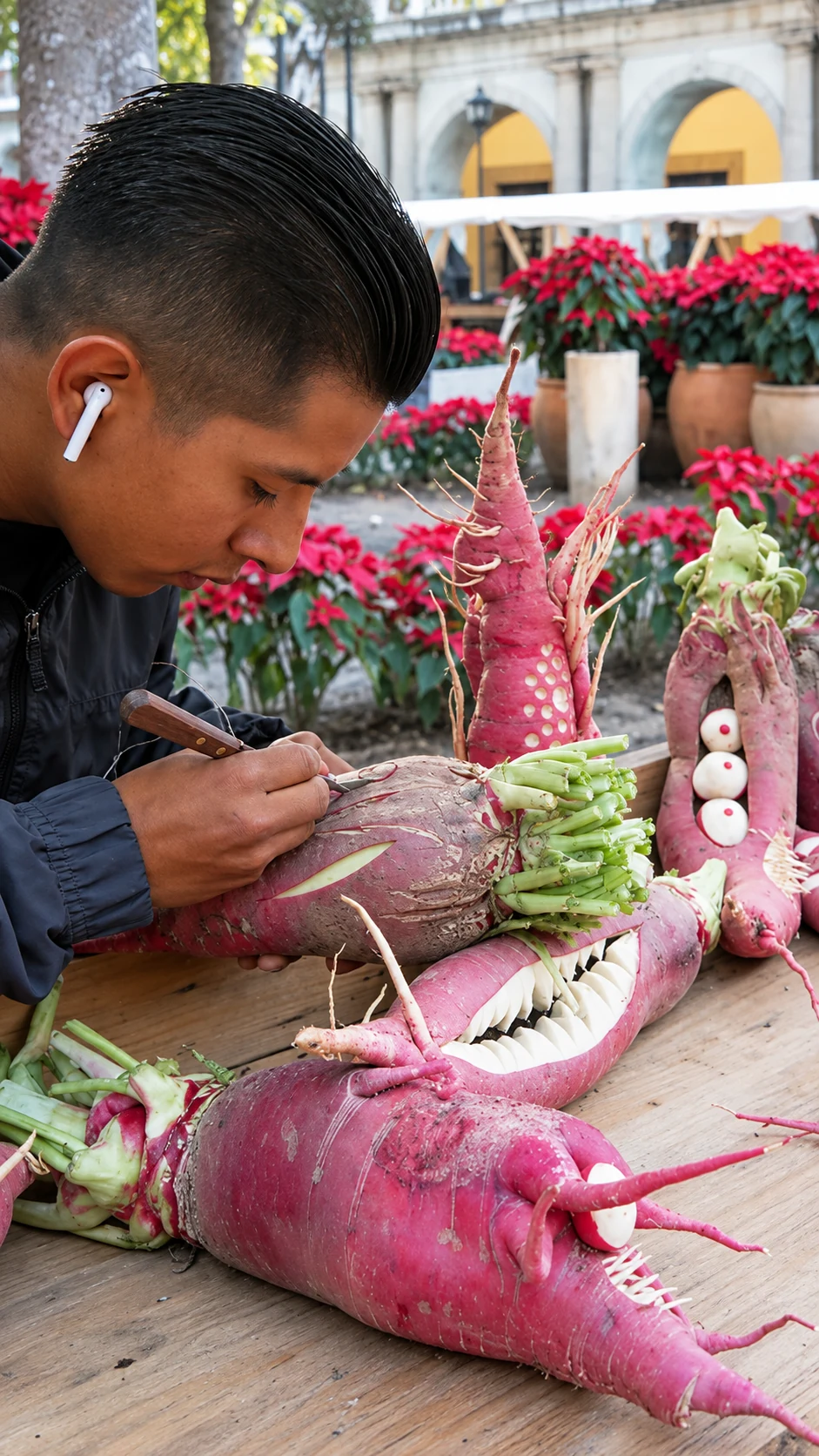
The longer we stayed, the more interested I became in the people behind the displays. I wanted a photograph of a finished scene, but I could happily stand and watch somebody adjust one small part of it. I would wait for the next movement even when I had no idea what needed changing.
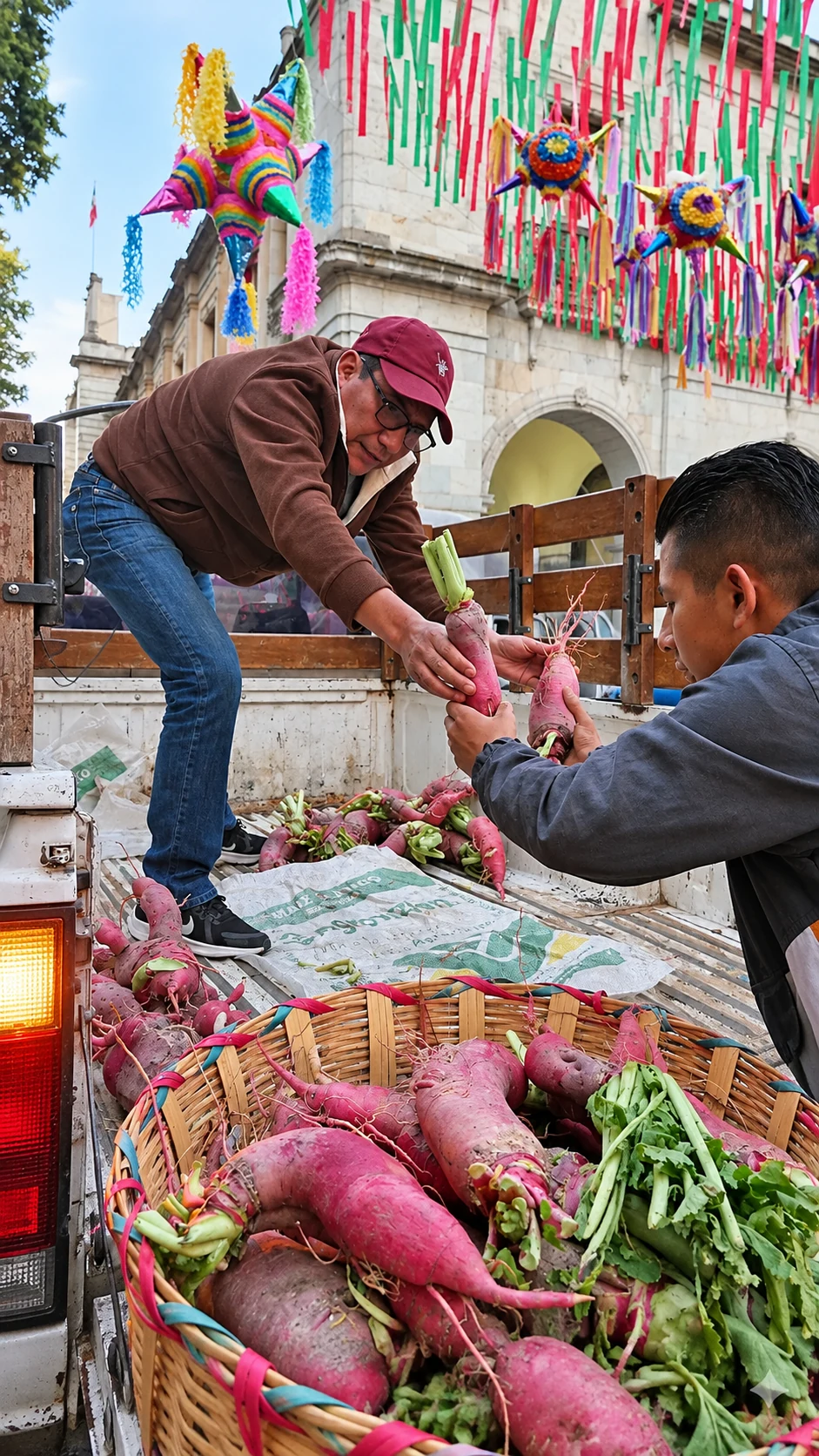
A lot of work happens before the figures reach the square. The radishes for the festival were grown at El Tequio, where the harvest took place on 20 December. The official report put it at more than fourteen tonnes. Fourteen tonnes. I had been thinking about the knife work; I hadn’t given much thought to growing all of it.
We had missed the harvest. At the exhibition, though, we started paying attention to things I would usually crop out: a tool on the table, hands beside a base, the person bending over a display. More of my photographs began to include the maker.
Swipe to see more
Another material
I mistook the corn husks for paper
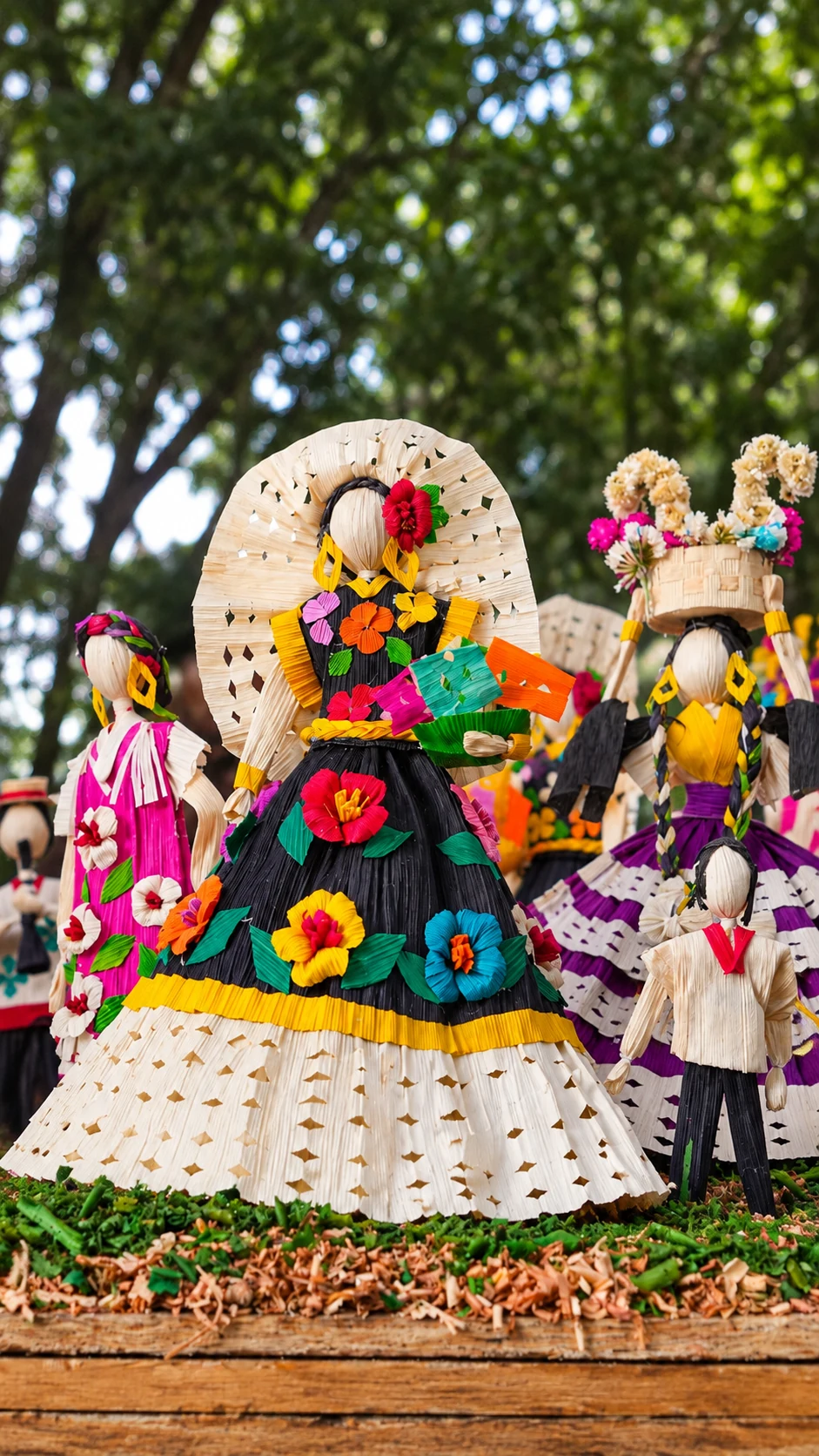
At some of the stands, the texture changed. We could see fibres, thin layers and folds where we had been looking at smooth cuts. Both of us leaned closer to work out what the figures were wearing. My first guess was paper.
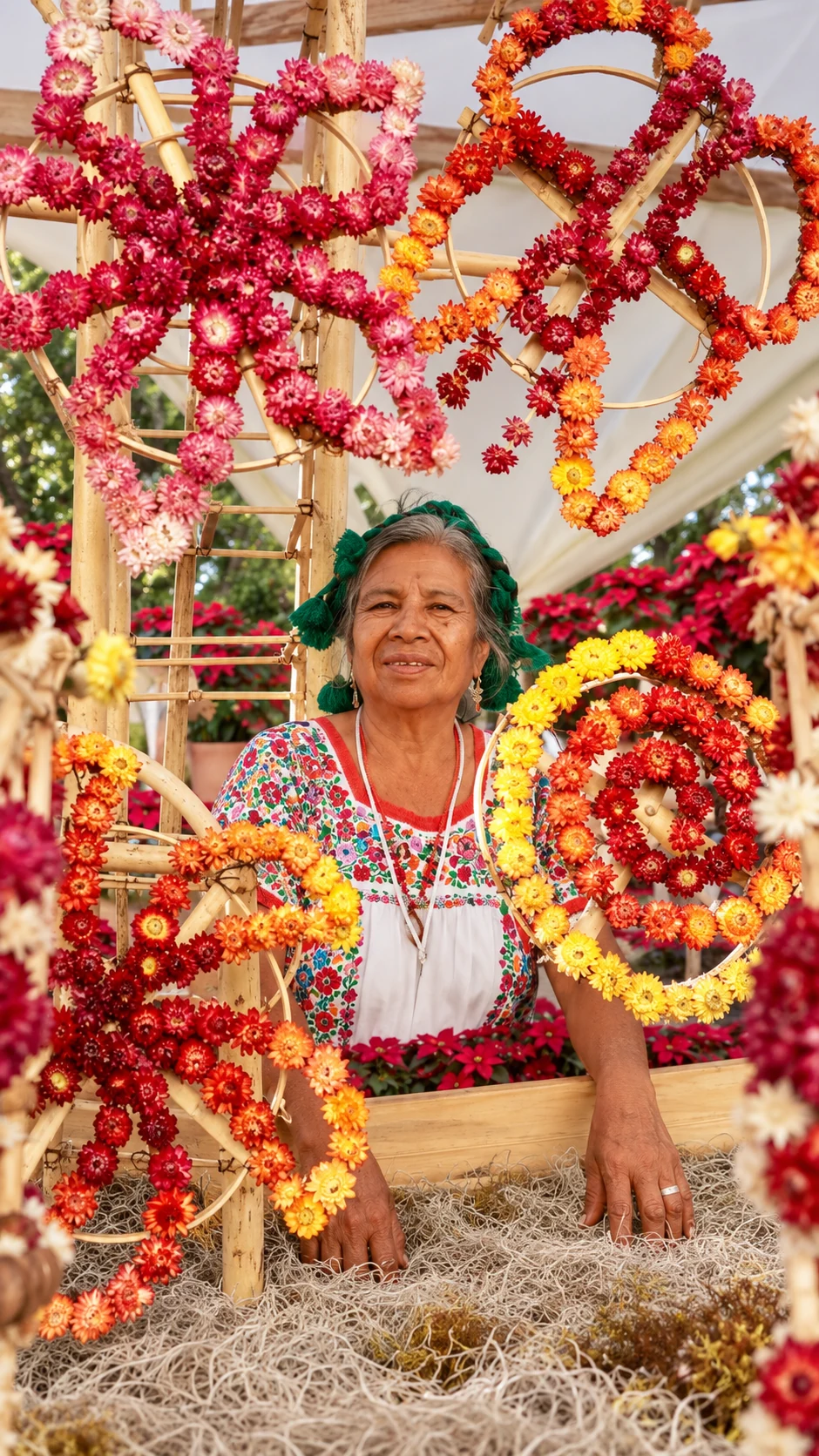
Totomoxtle means the dried husks around a corn cob. Those husks are used to make competition entries too. There is also a separate category for flor inmortal, dried flowers. After a succession of red-and-white figures, the different textures made us look all over again.
I preferred the softer folds in the corn-husk clothing. He was still occupied with how things were attached. I tried to point out a skirt; he showed me the base it stood on.
Before the trip, I had read that the first competition for decorated stalls took place on 23 December 1897, in connection with the market before Christmas. The link with a market appealed to me. I would have stopped at these stalls even if I had come to buy something entirely different.
There were scenes we couldn’t fully work out. We recognised musicians and dancers, but not every local reference. Sometimes we spent a while looking anyway. I was glad we hadn’t fitted this between two other appointments.
After dark
I wanted his photographs too
When the lights came on, I conceded that staying had been a good idea. Warm reflections, faces around the stands and bits of hanging lights began to creep into my photographs. Earlier, I had wanted to fill the frame with the figures. Now I kept stepping back to include what was happening around them.
We compared our phones. Mine contained an unreasonable number of small faces. His had more wide views and the constructions he had spent so long examining. We had been beside each other almost the whole time, yet there were pictures on his phone that I wanted immediately.
He sent them across while I scrolled through mine. We both stopped at one of the musicians. I had been so busy getting the face sharp that I had barely looked at the instrument. He enlarged the picture with two fingers, and we leaned over the phone together.
For your own trip
A few details to keep
- 23 December, in the Zócalo
- The main exhibition takes place in the central square of Oaxaca de Juárez. Give yourself time to look closely.
- The evening before is worth checking
- The convite we watched took place on 22 December. Look for it separately in the organisers’ programme when planning your trip.
- Check your year’s opening time
- We were able to enter at 3:00 PM (15:00). Check the organisers’ programme before your trip.
- Take a few wider pictures
- The carvings are easy to concentrate on. Leave room for the makers, the stands and the people looking at them too.