

Unforgettable experiences
Rio Carnival, from the streets to the Sambadrome
A brass band in the morning, a street full of costumes, and an entire samba school coming down the avenue after dark. Give Rio a few days. There is more than one Carnival to fall in love with.
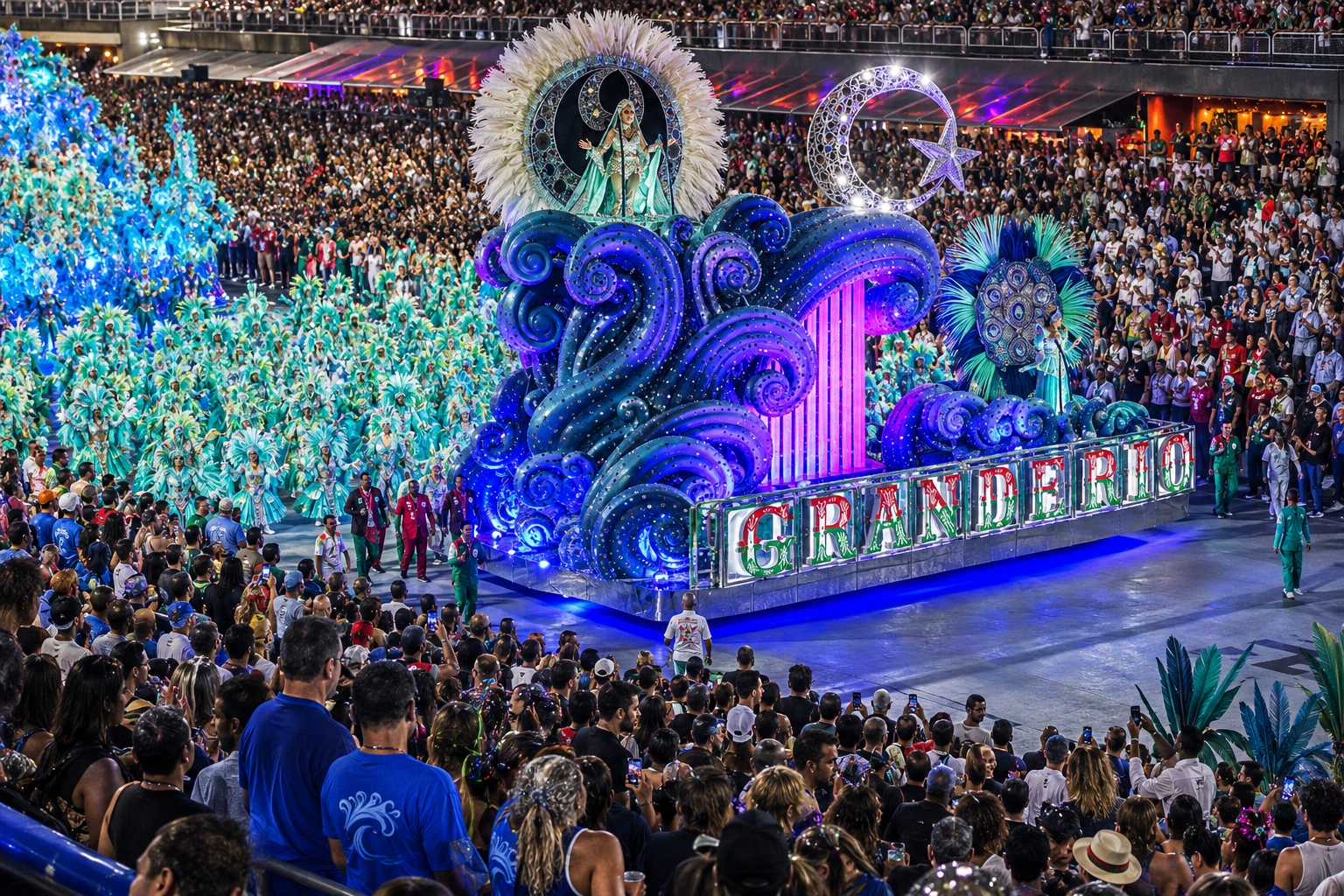
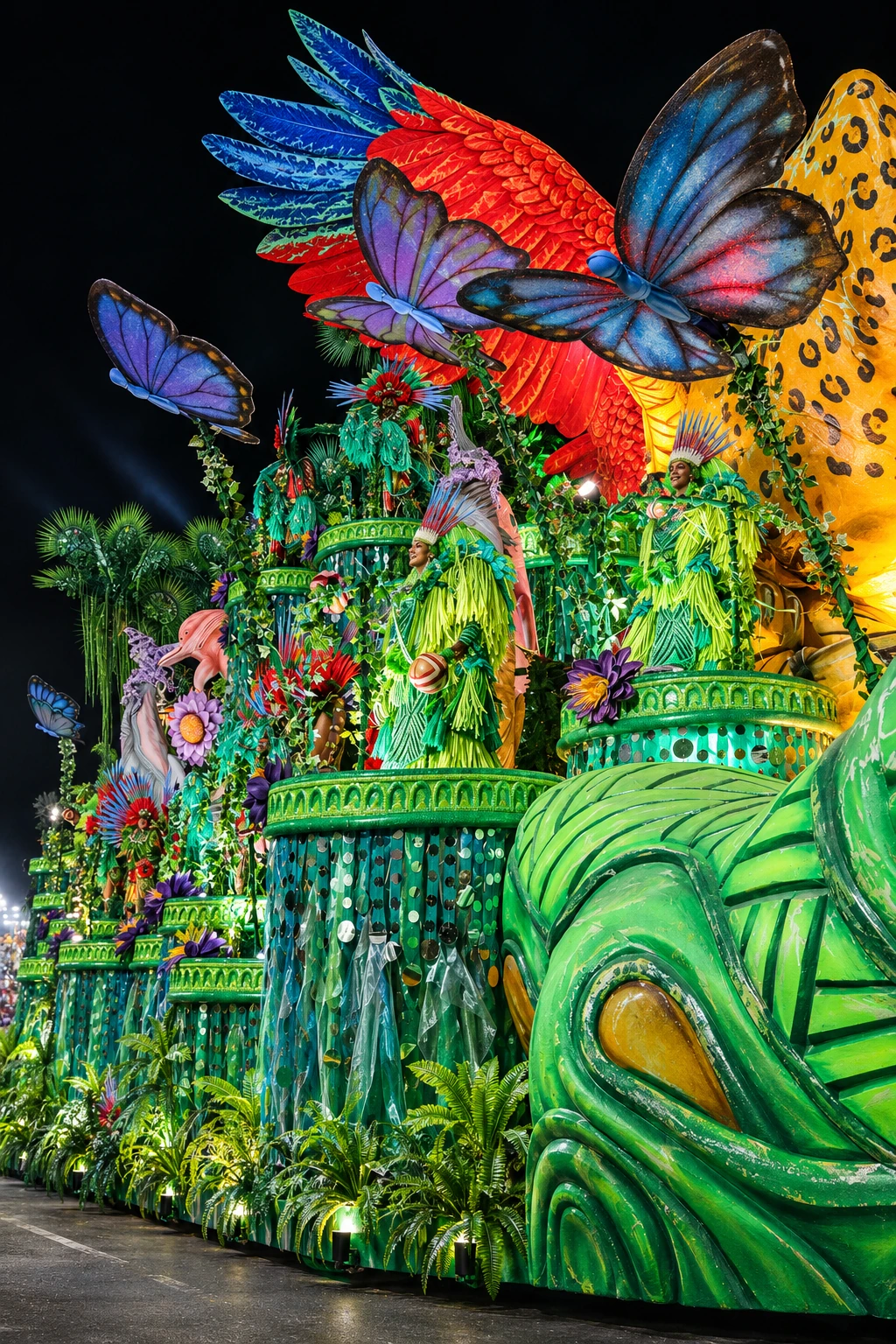
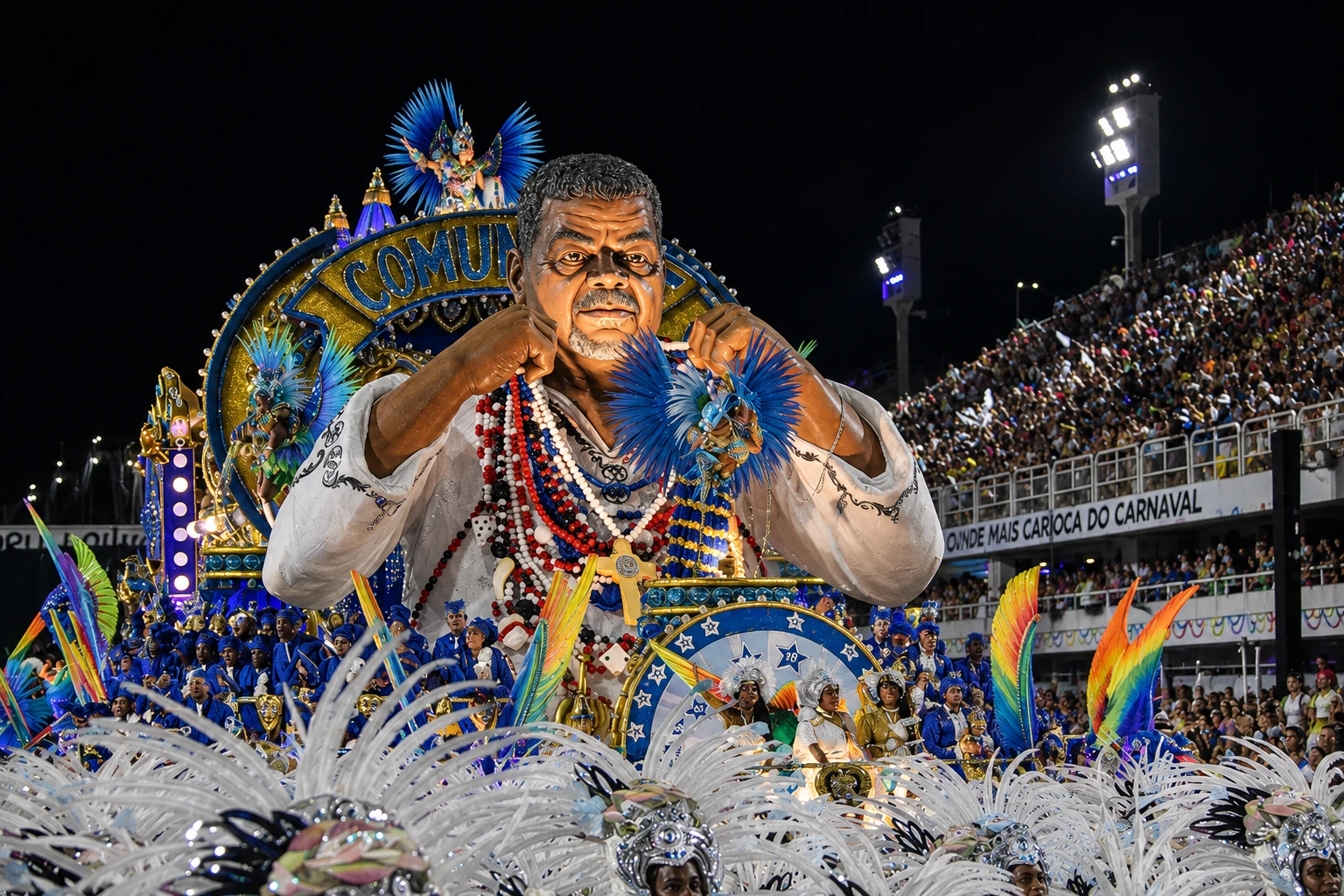
The first float is the easy thing to photograph. It is enormous, brilliantly lit, and moving through an avenue lined with people. Then you notice the dancers below it, the costumes further back, and the spectators who seem to know every word. There is suddenly too much happening for one frame.
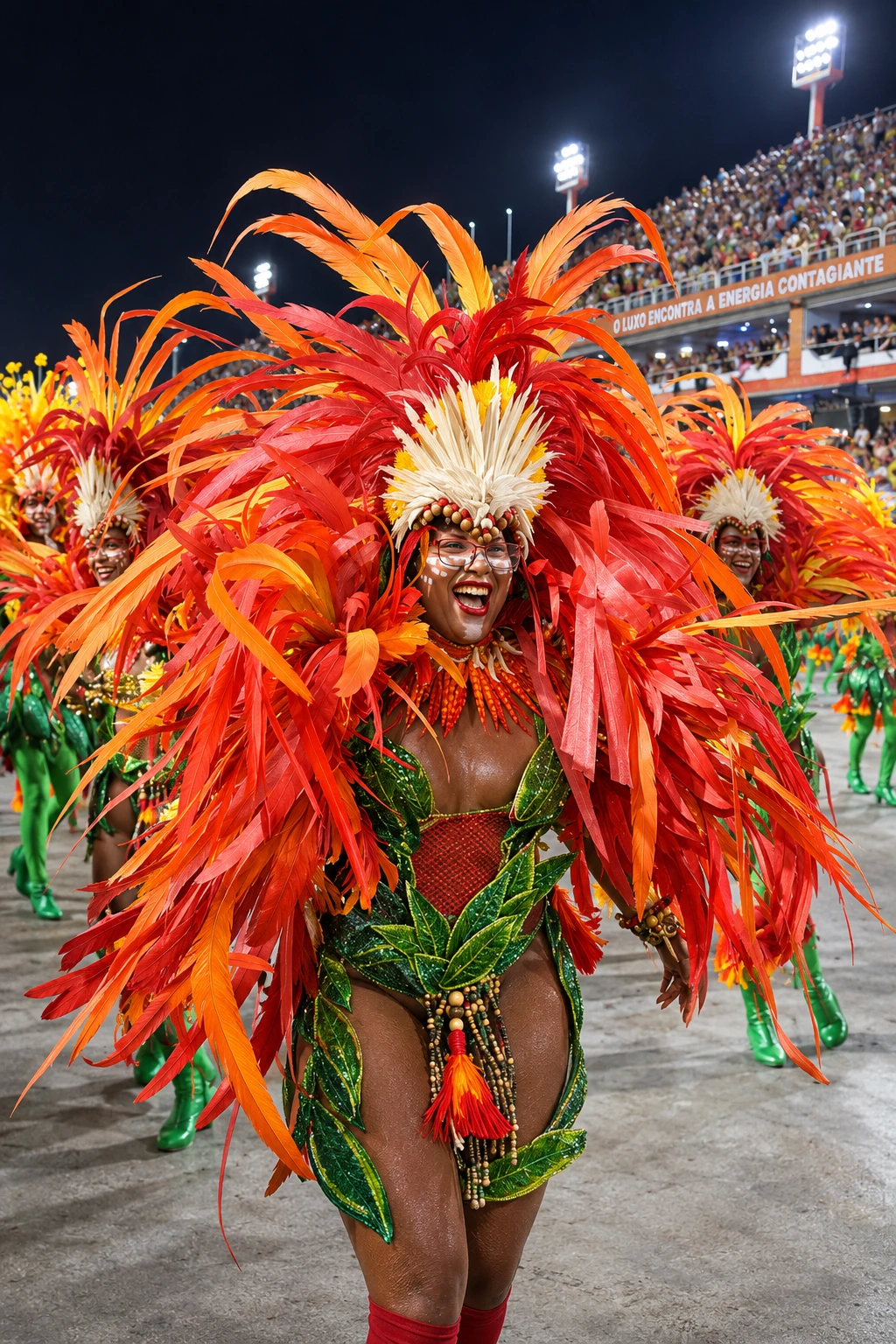
That is a good reason to put the phone down for a while. At Rio Carnival, the music keeps going while your attention moves between a hundred small things: a turning skirt, a raised flag, a drummer’s hands, a whole section of the crowd coming in on the chorus.
The Sambadrome is the night to build a trip around. The streets give the days their own character. Between them, there is enough to fill a holiday without turning every hour into an appointment.
Out in the city
The street party can start before your day does
A bloco is a Carnival group that brings its music and followers into the streets. Some draw enormous crowds; others feel closer to a neighborhood procession. A band, a gathering point and a shared repertoire can give an ordinary stretch of road a completely different purpose.
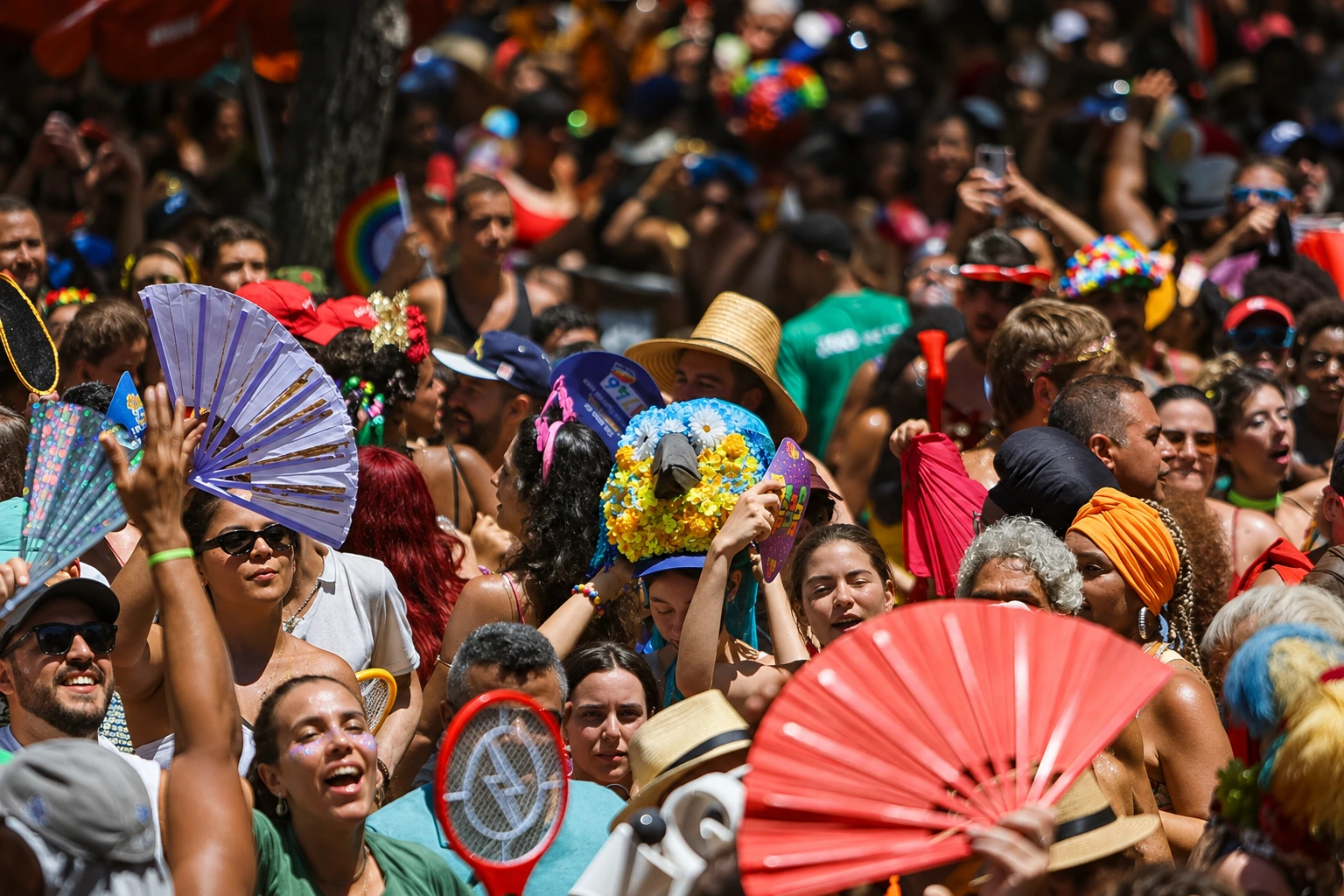
Morning matters here. Arriving in Rio with the idea that Carnival begins after dinner would leave out a great deal. Musicians and costumed revelers can already be out while the city is still buying breakfast. The light is different, the heat builds, and a costume that seemed extravagant in the hotel soon has plenty of competition.
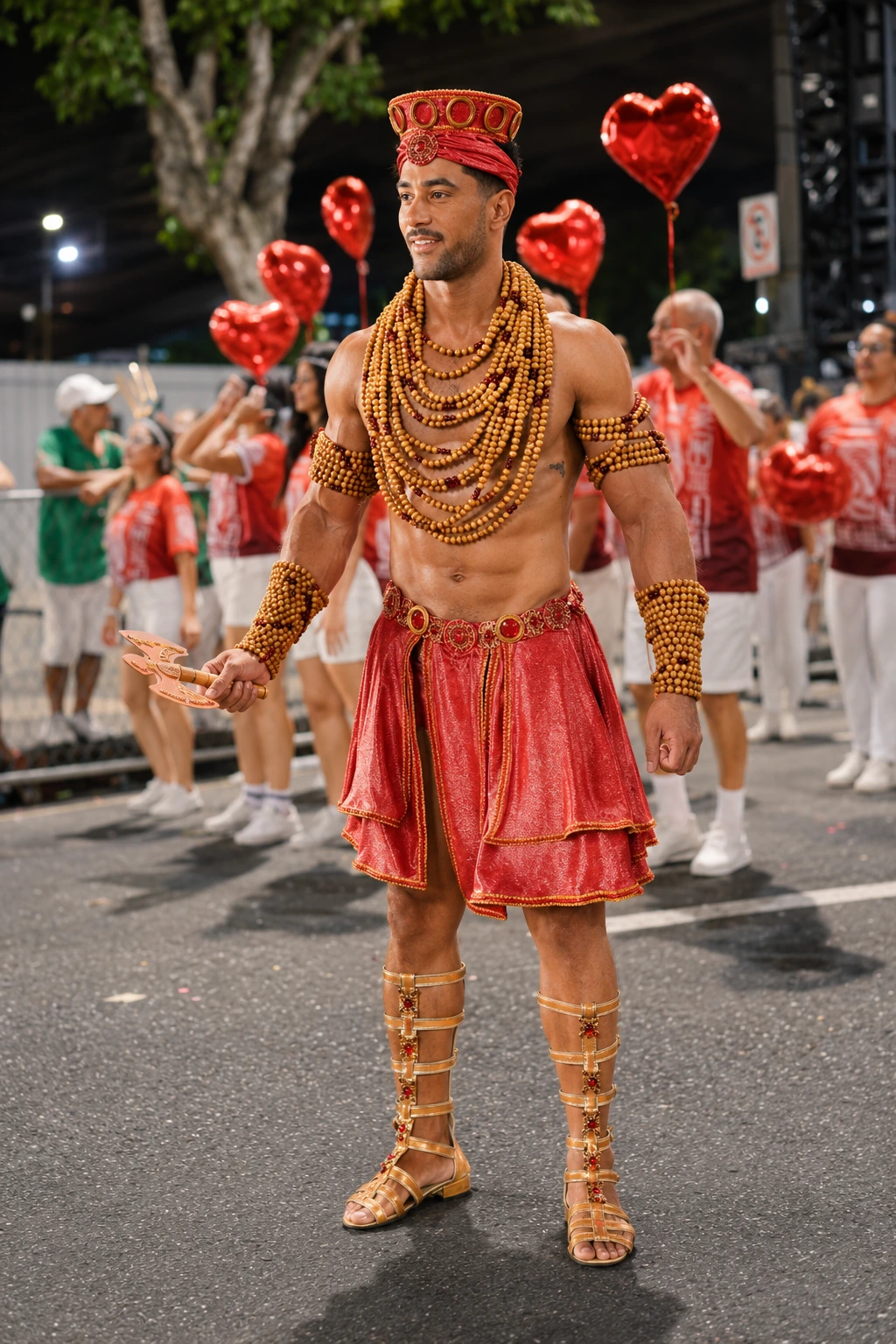
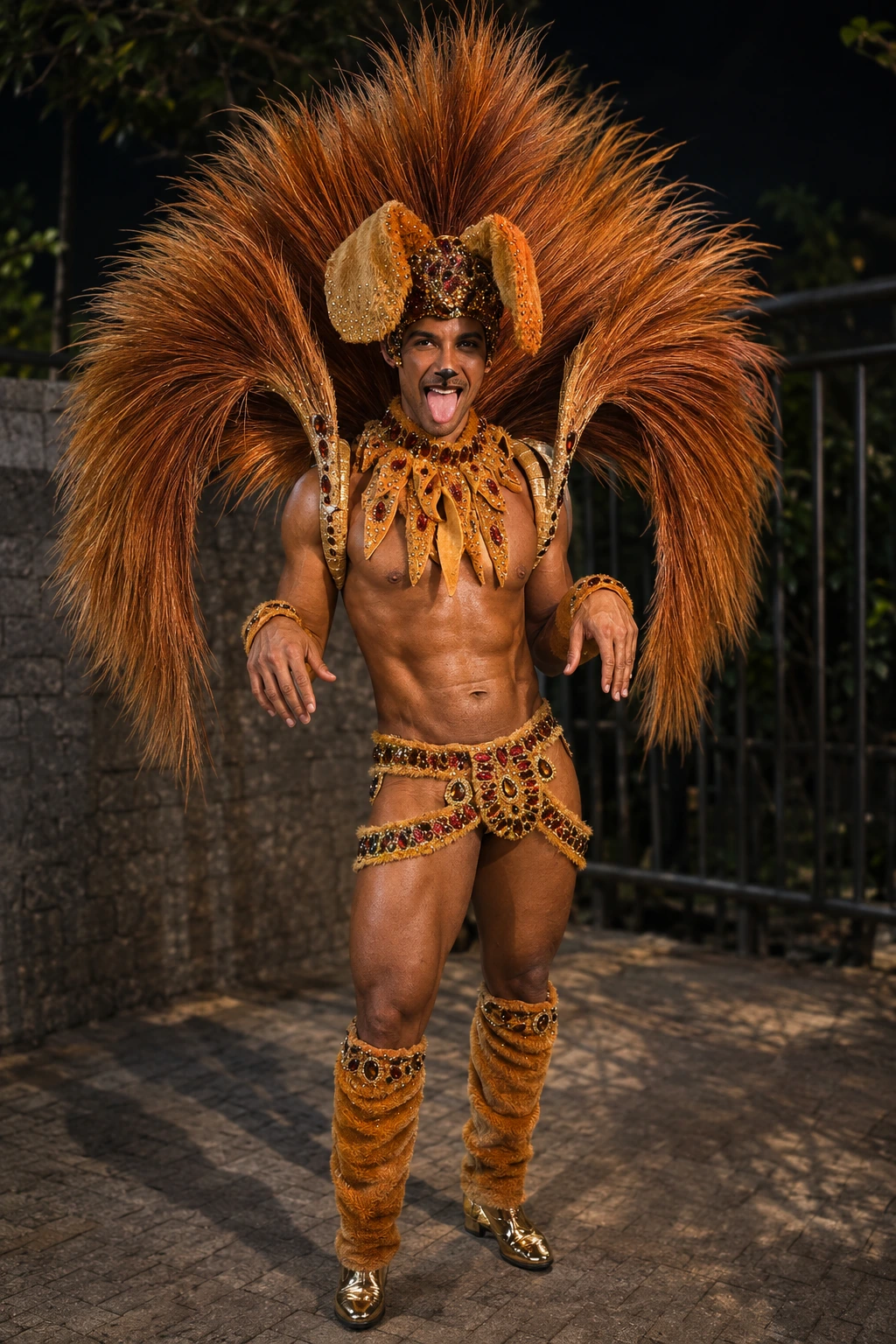
There is pleasure in the homemade details, too. A hat made to get a laugh. A face covered in glitter. Something familiar turned into an outfit with fabric, cardboard and considerable confidence. You do not need an elaborate costume to join in. You may simply wish you had packed one.
Find your bloco
Each neighborhood gives the music a different setting
In Centro, Cordão da Bola Preta brings black-and-white costumes and the old Carnival marches known as marchinhas. It is a place to hear songs that belong to generations of Brazilian Carnival, carried by a brass orchestra and a very large crowd.
Céu na Terra belongs to the hills of Santa Teresa, with a procession that makes sense among the neighborhood’s streets and slopes. Banda de Ipanema brings another long-running tradition to the beachside neighborhood. These names are useful starting points for choosing the sort of day you want; their meeting points and routes belong to each year’s program.
Pick one that interests you and leave room to enjoy it. Traveling across the city to catch three different gatherings can turn a musical day into a transport problem. One good bloco, time to eat and somewhere to sit afterward is a perfectly convincing Carnival plan.
Marquês de Sapucaí
After dark, the scale changes
The Sambadrome stretches the spectacle out in front of you. From the grandstands, you can follow a school approaching along the avenue and see how its sections fit together. At street level, a costume fills your view. Up here, hundreds of costumes form patterns.
Give yourself time to settle into the place. Find your sector, look down the avenue, get something to drink, and let the anticipation build around you. A night here deserves more than arriving at the last minute and leaving as soon as the most impressive float has passed.
For 2027, the twelve schools in the Grupo Especial perform across three competitive nights, with four schools each night. A single ticketed evening therefore contains several complete productions. The change from one school to the next is part of the pleasure: new colors, a new song, another story to follow.
Look a little closer
The costumes are telling a story
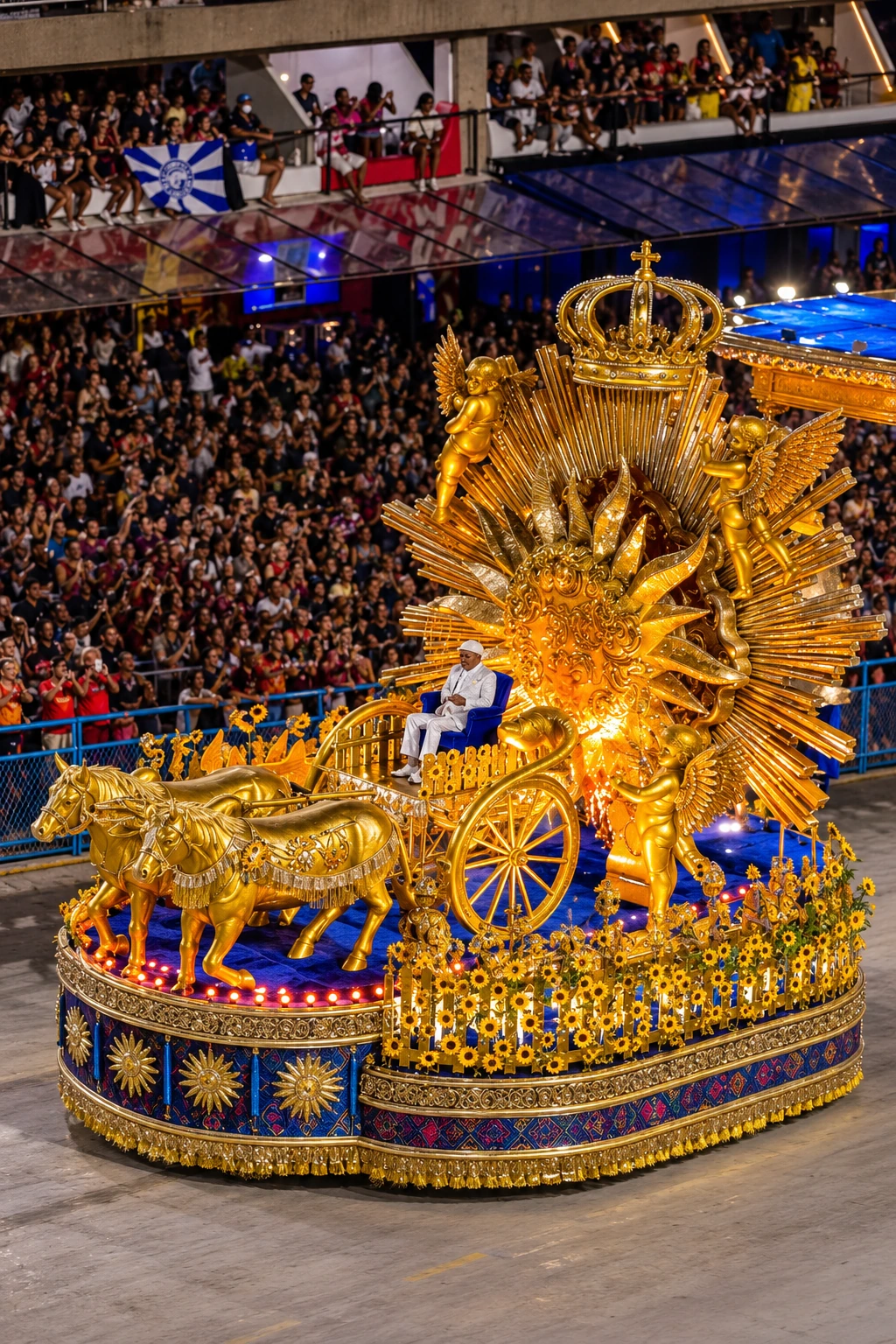
Each school builds its parade around an enredo, a theme developed through music, costumes, choreography and floats. Reading a short explanation beforehand gives the procession more to work with in your imagination. A figure on a float or a repeated shape in the costumes can suddenly become recognizable.
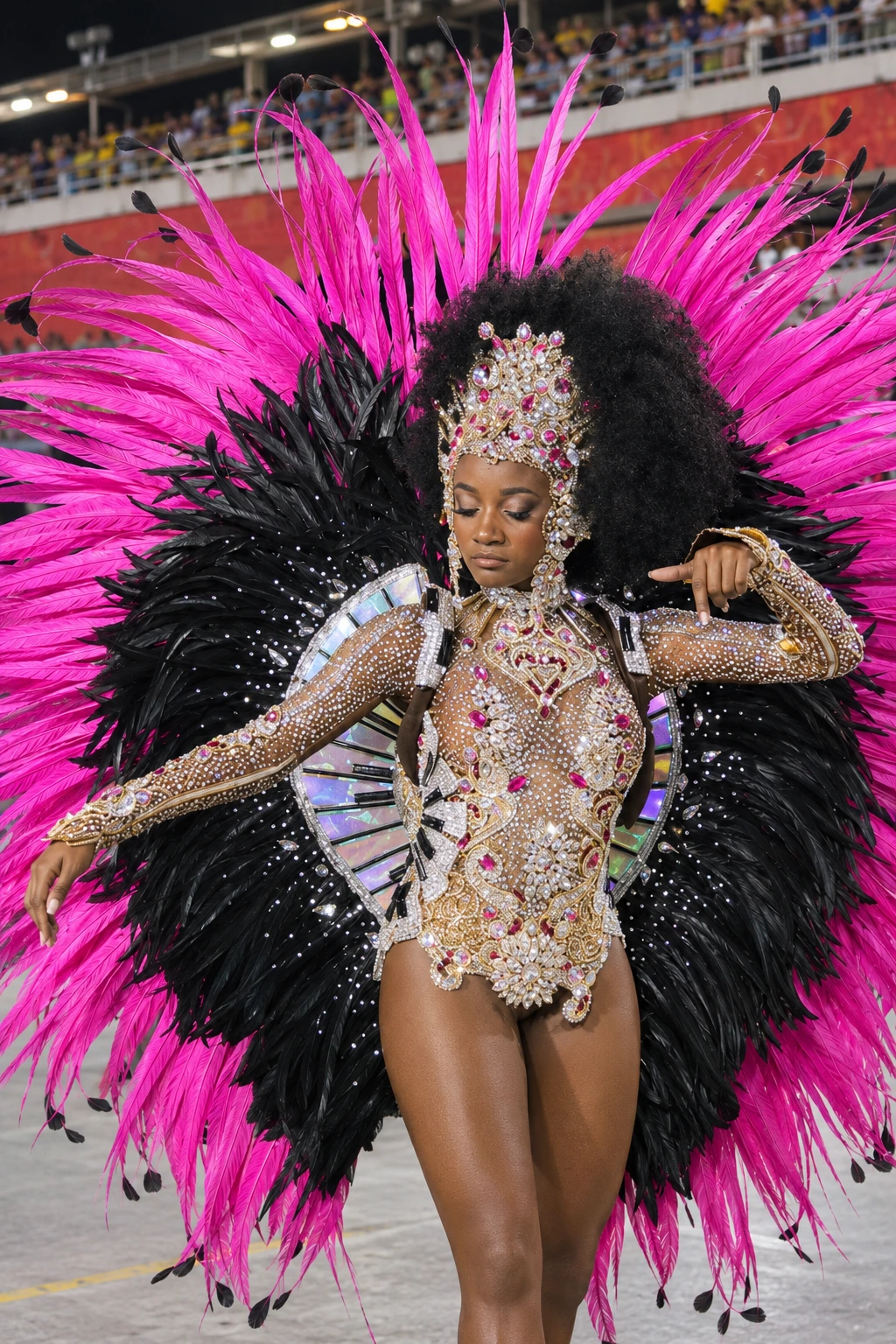
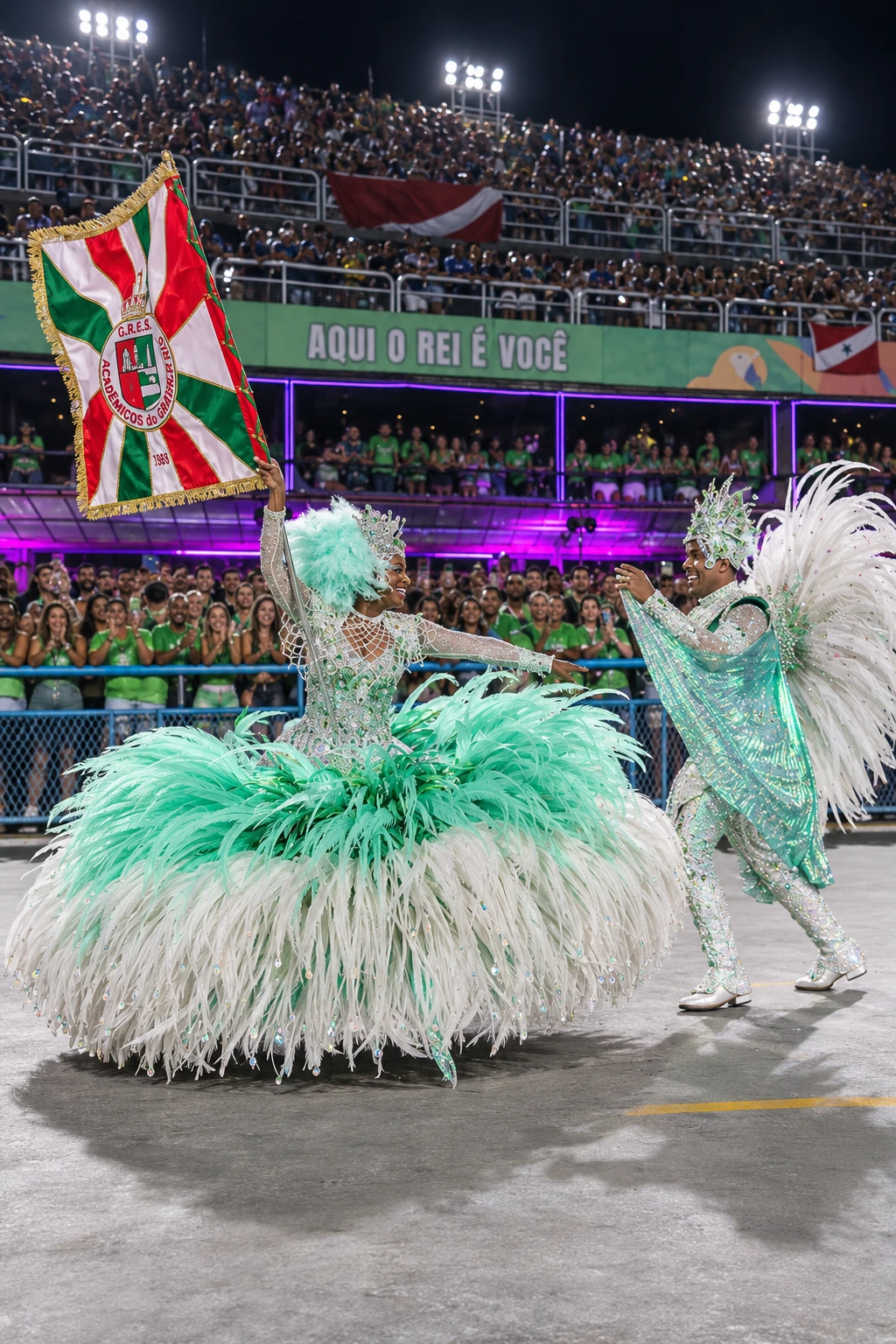
The opening comissão de frente introduces the school with a choreographed performance. Further along, the mestre-sala and porta-bandeira present its flag together. The percussion section, the bateria, keeps the music moving, while the samba-enredo carries the theme in song.
You do not need to understand every reference to enjoy the night. It helps to give some attention to the parts that can disappear behind the biggest floats: the precision of a turn, the way a group moves together, the detail in clothing made to be seen both close up and from the stands.
A performer laughing beneath an oversized hat can hold your attention as firmly as the float behind him. The faces deserve a little of the time that the feathers usually get.
Swipe to see more
Learn a little of the chorus
The song makes the night feel closer
Before the trip, listen to the sambas of the schools performing on your chosen night. Even recognizing the melody changes the experience. A song that sounded unfamiliar through headphones has a different force when the avenue and the people around you are singing it together.
The schools’ own pages give you their themes, lyrics and music. Choose one to spend a little time with. Follow the words, learn where the chorus comes in, and see which part stays in your head. You can arrive with something to recognize instead of meeting every element for the first time.
It also draws attention back to the people making the spectacle. Each school has its own home, colors and supporters. The flags in the stands are part of that attachment. To someone beside you, the approaching school may be the reason they have been waiting all evening.
Leave the next morning open
You will want to stay longer than you planned
It is easy to imagine Carnival as a week of constant energy when you are booking it from home. In Rio, the distance between a sunny bloco and a long night in the stands is measured in tired feet. A proper meal, a shower and a quiet hour in the room can make the evening much better.
The same goes for the morning afterward. Leave it free. There is no prize for reaching every viewpoint on too little sleep, and Rio’s coastline will still be there when you are ready for it. A late breakfast and an unhurried walk can belong to the trip just as much as the parade.
The big images will be easy to find in your camera roll: the float, the avenue, the fireworks. Give yourself enough time for the other parts too. The song you begin to recognize. The outfit that makes you laugh. The moment another school appears and you decide you can stay a little longer.
For your own trip
The dates and decisions that matter
- Three competitive nights in 2027
- Sunday, February 7: União de Maricá, Beija-Flor, Paraíso do Tuiuti and Vila Isabel.
Monday, February 8: Mocidade, Unidos da Tijuca, Salgueiro and Imperatriz Leopoldinense.
Tuesday, February 9: Portela, Viradouro, Grande Rio and Mangueira. These are the parade orders for each night. - The Champions’ Parade
- The six highest-placed schools return on Saturday, February 13, 2027. Choose this night if you want to see the leading schools after the competition has been decided.
- Choose the view as well as the date
- Arquibancadas are the grandstands; frisas are boxes beside the parade avenue; cadeiras individuais are numbered individual seats. Camarotes are hospitality spaces with their own inclusions and prices. Start with the Rio Carnaval ticket page so you know which kind of evening you are booking.
- Ticket availability
- On November 17, 2026, the standard grandstands, frisas and numbered seats on Ticketmaster’s 2027 event page were marked sold out. Camarotes are listed separately. Keep the ticket decision ahead of any nonrefundable travel plans built around a particular parade night.
- Your sector determines the metro stop
- For the Sambadrome, Praça Onze serves the even-numbered sectors and Central do Brasil serves the odd-numbered sectors. The 2027 late-night operating plan needs its own confirmation; the previous Carnival’s extended service is not a timetable for your trip.
- Keep space for the street Carnival
- Blocos have their own dates, meeting times and routes, separate from the Sambadrome program. The city has announced a January 16 start for the 2027 street Carnival season. Use Rio’s street Carnival listings as the individual events are released.
Sources